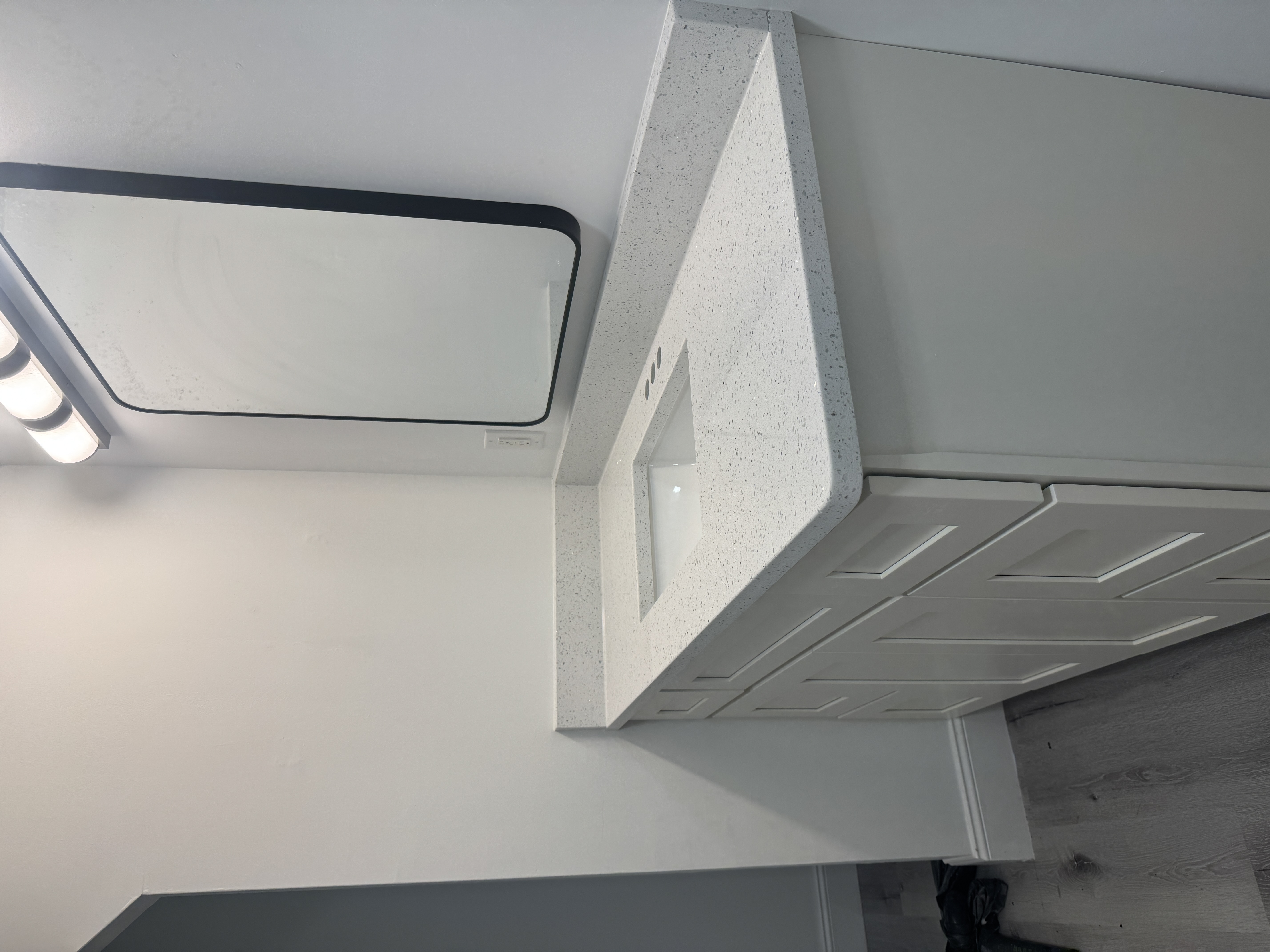
Granite, quartz, quartzite and marble can all create beautiful
kitchens, but they do not perform or age in exactly the same way.
Compare the characteristics that matter before choosing the
countertop material for your kitchen.
There is no single countertop material that is best for every
kitchen. Granite offers natural variation and strong
all-around performance. Quartz offers low porosity and relatively
simple maintenance. Quartzite combines natural-stone character with
impressive durability. Marble provides a distinctive classic look
but requires greater acceptance of etching and patina.
01 — Before Choosing
What Makes a Countertop Right for a Kitchen?
Kitchen countertops have to do more than look good in a showroom.
They become one of the most frequently used surfaces in the home.
Before choosing a material, think about how your household actually
uses the kitchen.
01
Maintenance
Decide how much routine care and natural-stone maintenance you
are comfortable with.
02
Heat
Consider how often hot cookware or heat-producing appliances
are used around the countertop.
03
Spills
Busy kitchens may regularly encounter oils, sauces, drinks and
other spills.
04
Appearance
Decide whether you prefer natural variation or more controlled
and repeatable patterns.
05
Daily Use
A heavily used family kitchen may prioritize different
characteristics than a lightly used entertaining space.
06
Project Design
Islands, waterfalls, backsplash choices, edge profiles and slab
layout can all affect the final design.
02 — Material Comparison
Granite, Quartz, Quartzite or Marble?
Each material offers a different combination of appearance,
maintenance and performance. Understanding those differences makes
the selection process much easier.
Natural Stone
Granite
Granite is a natural stone known for unique slab-to-slab
variation and strong overall kitchen performance.
Natural colors and patterns
Generally good heat resistance
Durable for everyday kitchen use
Sealing needs vary by the specific stone
Each slab is naturally unique
Engineered Surface
Quartz
Engineered quartz combines mineral quartz with binders and other
components to create a generally nonporous countertop surface.
Generally does not require penetrating sealer
Wide range of controlled designs
Low porosity
Practical everyday maintenance
Requires protection from excessive heat
Natural Stone
Quartzite
Quartzite is a natural metamorphic stone often selected for its
distinctive movement and durable mineral structure.
Natural slab variation
Often dramatic visual movement
Durable natural-stone surface
Sealing needs depend on the specific stone
Different from engineered quartz
Natural Stone
Marble
Marble provides a classic natural-stone appearance but requires a
homeowner who understands its sensitivity to acids and visible
wear.
Distinctive natural veining
Classic architectural appearance
Can develop patina over time
Susceptible to acid etching
Requires more maintenance awareness
03 — At a Glance
Kitchen Countertop Comparison
This table summarizes broad characteristics. Individual natural
stones and engineered products can vary, so the specific slab or
product should always be considered before making a final choice.
Characteristic
Granite
Quartz
Quartzite
Marble
Material Type
Natural stone
Engineered surface
Natural stone
Natural stone
Pattern
Natural variation
More controlled designs
Natural variation
Natural veining
Penetrating Sealer
Depends on stone
Generally not required
Depends on stone
May be appropriate
Heat Consideration
Generally heat resistant; trivets still sensible
Protect from excessive heat
Generally heat resistant; trivets still sensible
Use sensible heat protection
Acid Sensitivity
Varies by material/mineral content
Follow manufacturer care guidance
Varies by specific stone
High awareness needed due to etching
Appearance
Unique natural slabs
Broad engineered design selection
Distinctive natural movement
Classic natural veining
Material Names Don't Tell the Whole Story
Natural stone varies. Even two slabs sold under the same broad
material category can differ in appearance and absorption.
Engineered quartz products can also have different manufacturer
specifications and care requirements.
04 — Heat
Which Kitchen Countertops Handle Heat Best?
Natural stone materials such as granite and quartzite generally
tolerate heat well, but it is still sensible to use trivets rather
than repeatedly placing extremely hot cookware directly on an
installed countertop.
Engineered quartz requires more caution because its resin-based
components can be affected by excessive heat or rapid temperature
changes.
Marble is natural stone, but heat resistance should not be treated
as permission to expose the countertop unnecessarily to hot
cookware.
The Simple Kitchen Rule
Trivets are inexpensive. Countertops are not. Using heat
protection is a practical habit regardless of which surface you
select.
05 — Stains & Maintenance
Which Countertop Is Easiest to Maintain?
Engineered quartz is generally nonporous and normally does not
require the penetrating sealers associated with some natural stone.
That makes it attractive to many homeowners seeking relatively
straightforward routine maintenance.
Granite and quartzite are natural stones. Their absorption and
sealing needs depend on the specific material.
Marble requires additional awareness because acidic substances can
react with the stone and create etching. Sealing may help reduce
absorption when appropriate, but it does not make marble
acid-proof.
Regardless of material, cleaning spills promptly is a good kitchen
habit.
Countertop selection should consider the entire kitchen design,
including cabinetry, island size, backsplash and lighting.
06 — Appearance
Natural Variation or Controlled Design?
Appearance is one of the biggest differences between countertop
categories.
Natural Stone
Granite, quartzite and marble are quarried materials. Their veining,
mineral patterns, movement and color variation are naturally
occurring.
That uniqueness is a major reason many homeowners choose natural
stone, but it also means the exact slab matters.
Engineered Quartz
Quartz manufacturers can create colors and patterns with more
design consistency than natural stone. Depending on the product,
this can range from subtle solid designs to surfaces intended to
resemble natural stone movement.
Neither approach is inherently better. The choice depends on
whether you value natural individuality or greater design
predictability.
07 — Kitchen Islands
Large Islands Make Slab Selection Even More Important
A large kitchen island often becomes the visual centerpiece of the
room.
The island's dimensions can affect slab selection, seam planning,
pattern placement and overall material requirements.
Waterfall ends, large overhangs, sinks and cooktops can also add
fabrication and design considerations.
Homeowners sometimes compare kitchen countertops only by the
advertised material price.
The complete project can also be affected by total countertop area,
slab requirements, layout, edge profile, sink and cooktop cutouts,
backsplash, waterfall ends, fabrication complexity and installation
conditions.
Our
Countertop Cost Guide
explains these factors in more detail without relying on a
one-size-fits-all price.
10 — Your Kitchen
Choose the Countertop Around How You Actually Live
Instead of searching for a universal winner, think about which
characteristics matter most in your home.
A homeowner who wants natural variation may make a different choice
than someone who prioritizes low porosity. A household that loves
the evolving patina of natural marble may view maintenance very
differently from someone who wants the appearance to remain as
consistent as practical.
Your kitchen design, cooking habits, maintenance expectations and
preferred appearance should all be part of the decision.
Narrowing the Choices
Which Material Fits Your Priorities?
These aren't universal rankings. They are useful starting points
for matching countertop characteristics to the way you want your
kitchen to look and function.
Consider Granite If
You Want Unique Natural Stone
Granite is worth considering if you value natural slab variation,
durable everyday performance and generally good heat resistance,
while accepting that sealing needs vary by stone.
Consider Quartz If
You Prioritize Lower Routine Maintenance
Engineered quartz may fit homeowners who value low porosity,
broad design options and generally no need for routine penetrating
sealer, while being willing to protect the surface from excessive
heat.
Consider Quartzite If
You Want Dramatic Natural Movement
Quartzite may appeal to homeowners who want distinctive natural
stone with strong durability while understanding that absorption
and sealing needs vary by the specific stone.
Consider Marble If
You Love Its Natural Character
Marble may suit homeowners who strongly value its classic veining
and are comfortable with acid sensitivity, etching and the patina
that can develop with use.
Frequently Asked Questions
Kitchen Countertop FAQs
Common questions homeowners ask while comparing countertop
materials.
What is the best countertop material for a kitchen?
There is no universal best material. Granite, quartz, quartzite
and marble offer different combinations of appearance,
maintenance and performance. The right choice depends on your
kitchen and priorities.
Is granite or quartz better for kitchen countertops?
Granite offers natural variation and generally good heat
resistance. Engineered quartz offers low porosity, broad design
choices and generally does not require penetrating sealer. Which
is a better fit depends on what characteristics you value.
Is quartzite good for kitchens?
Quartzite can work very well in kitchens for homeowners seeking
durable natural stone and distinctive movement. Its specific
absorption and sealing needs should be evaluated.
Is marble practical for a kitchen?
Marble can be used in kitchens, but homeowners should understand
that acidic substances can etch it and that visible patina may
develop over time.
Which countertop requires the least maintenance?
Engineered quartz is generally nonporous and normally does not
require penetrating sealer, making it attractive to homeowners
seeking relatively simple routine maintenance.
What should I consider before choosing kitchen countertops?
Consider appearance, maintenance, heat, spills, natural versus
engineered materials, project design, sink and cooktop
configuration, edge details and overall project budget.
Keep Learning
More Countertop Guides
Continue planning your project with the Big Stone Countertop
Learning Center.
Big Stone Granite & Design provides granite, quartz, quartzite and
marble countertop fabrication and installation for kitchens
throughout Central Florida and surrounding areas.