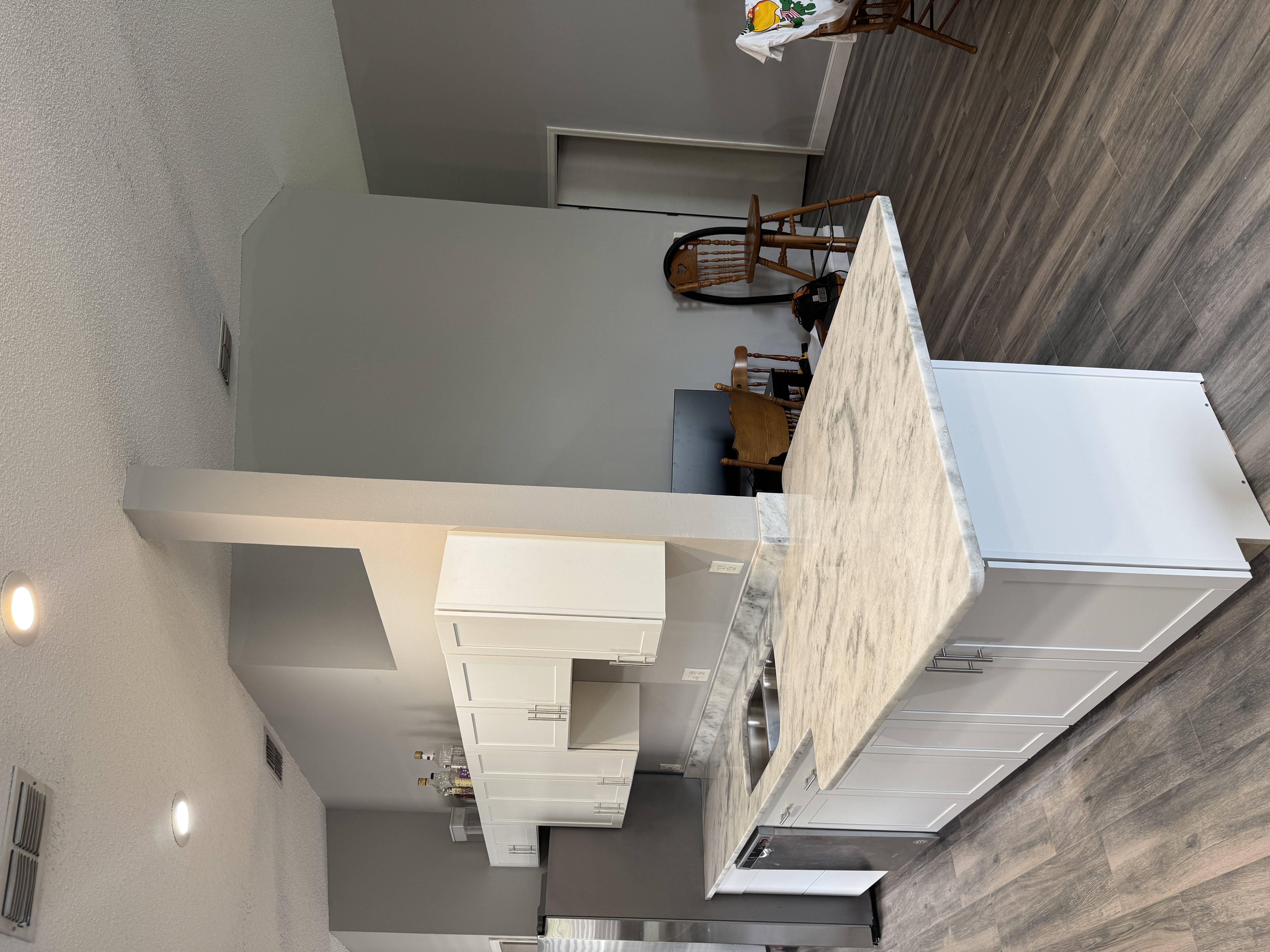
01 — The Big Picture
How a Countertop Project Moves From Idea to Installation
Countertop installation is the final visible stage of a process that begins much earlier.
Before finished countertop pieces can be installed, the project must be measured, planned and fabricated for the actual kitchen, bathroom or other installation area.
Plan
Review the layout, project goals, material and design details.
Measure
Final field measurements or templating capture the actual project conditions.
Fabricate
Countertop pieces are cut and finished for the approved project.
Install
Finished pieces are transported, positioned, joined and secured as appropriate for the project.
02 — Planning
Choose the Material & Define the Project
Before fabrication can begin, the project needs a clearly defined scope.
This generally means determining the countertop areas, selecting a material and identifying important design features.
Project decisions may include:
- Granite, quartz, quartzite, marble or another approved material
- Specific slab or engineered product selection
- Countertop layout
- Edge profile
- Sink configuration
- Cooktop or other openings
- Backsplash
- Island overhangs
- Waterfall panels
These choices can influence both the appearance of the finished countertops and the fabrication requirements.
If you're still comparing materials, our Granite vs. Quartz and Quartz vs. Quartzite guides can help explain some of the major differences.
03 — Final Field Measurements
Measurements & Templating
Preliminary homeowner measurements can help with early planning and estimates, but fabrication requires accurate information about the actual installation area.
Final field measurements or templating can account for details that may not appear on a basic drawing.
Depending on the project, these can include:
- Actual cabinet positions
- Wall conditions
- Finished countertop dimensions
- Overhangs
- Sink and appliance locations
- Corners and changes in direction
- Potential seam locations
- Other site-specific details
Ask Before the Measurement Appointment
The required site conditions before final measurement can vary by project and fabricator. Confirm what cabinets, appliances, sinks or other components need to be installed, available or selected before the appointment.
For early project planning, see our How to Measure for Countertops guide.
04 — Slab Planning
Countertop Layout & Slab Planning
Once accurate project dimensions are available, the required countertop pieces can be planned within the selected material.
For natural stone, slab layout can be particularly important because every slab has its own pattern, movement and usable areas.
Layout decisions may consider:
- Piece dimensions
- Slab dimensions
- Pattern direction
- Vein placement
- Waterfall panels
- Cutouts
- Potential seam locations
- Material yield
Engineered materials can also have directional patterns or design features that should be considered during layout.
05 — Fabrication
Turning the Material Into Finished Countertop Pieces
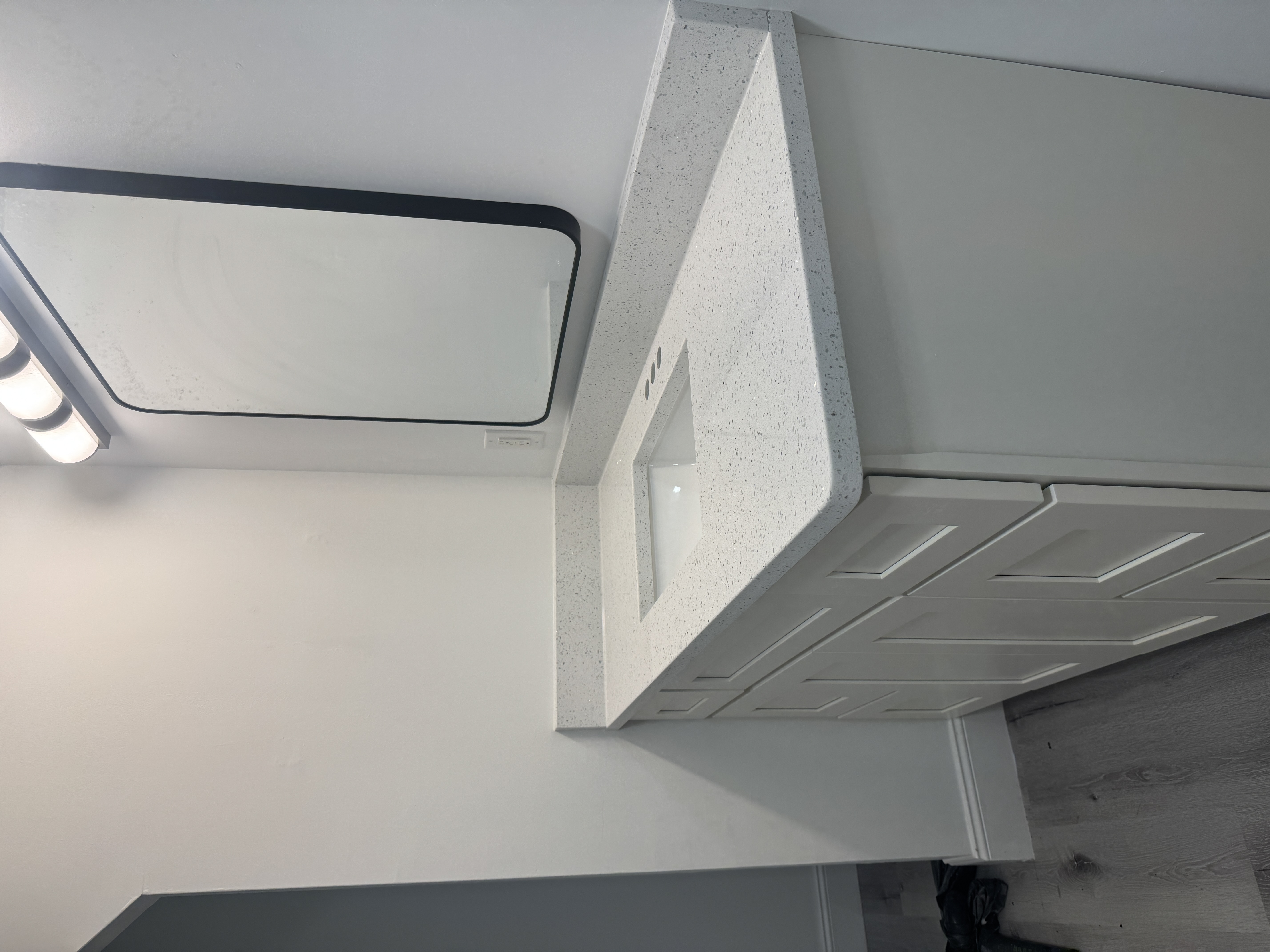
Fabrication transforms the selected slab or engineered surface into the pieces required for the project.
Depending on the design, fabrication can involve:
- Cutting countertop pieces
- Creating sink and cooktop openings
- Finishing exposed edges
- Preparing seam areas
- Creating waterfall or mitered components
- Finishing backsplash pieces
- Polishing appropriate surfaces and edges
More complicated layouts can require additional fabrication compared with straightforward countertop runs.
Edge selection is one example. Our Countertop Edge Profiles Guide explains several common styles.
06 — Before Installation
Preparing for Countertop Installation
Good preparation can make installation day easier for both the homeowner and installation crew.
Exact requirements vary, so always follow the instructions provided for your specific project.
Common preparation considerations include:
- Clearing items from countertop work areas
- Protecting or relocating nearby belongings
- Creating a clear path from the entry point to the work area
- Keeping children and pets away from active work areas
- Confirming appliance and sink requirements
- Confirming plumbing or electrical responsibilities
- Confirming whether existing countertop removal is included
07 — Existing Countertops
What Happens to the Old Countertops?
If your project is a remodel, the existing countertop may need to be removed before the new pieces can be installed.
Removal and disposal responsibilities should be confirmed before installation because they may vary by project and quote.
Existing countertop removal can also reveal conditions that were not visible beforehand.
Confirm the Scope Before Installation Day
Don't assume demolition, disposal, plumbing, electrical work, appliance work or other trades are automatically included in a countertop installation. Review the actual project scope so you know who is responsible for each part.