01 — Everyday Care
How Should You Clean Countertops Every Day?
Routine countertop care usually does not need to be complicated. The important part is using a cleaning method that is appropriate for the actual surface.
For many countertop materials, a soft cloth or non-abrasive sponge with a mild cleaner suitable for that surface is a practical place to start.
Remove crumbs and grit rather than grinding them across the surface, wipe up spills promptly, and dry the countertop when appropriate to help reduce residue and streaking.
Good Everyday Habits
- Wipe up spills promptly
- Use soft cloths or non-abrasive sponges
- Use cleaners appropriate for the material
- Use cutting boards
- Use trivets or heat protection
- Follow manufacturer instructions for engineered surfaces
Avoid Assuming
- Every stone uses the same cleaner
- Every natural stone needs the same sealing schedule
- Quartz is completely heat-proof
- Natural stone is stain-proof
- Hard surfaces cannot scratch
- Sealer prevents every type of damage
02 — Know Your Surface
Countertop Care Is Material-Specific
Granite, quartz, quartzite and marble may all be sold as premium countertop surfaces, but they are not interchangeable from a care standpoint.
Granite, quartzite and marble are natural stones. Engineered quartz is a manufactured surface that combines mineral quartz with binders, resins, pigments and other components depending on the product.
Those differences affect porosity, heat considerations, chemical sensitivity, sealing and maintenance.
03 — Granite
How to Care for Granite Countertops
Granite is a natural stone, and individual granite varieties can differ in mineral composition, absorption and finish.
For routine cleaning, use products appropriate for natural stone. Avoid assuming that a harsh household chemical is safe simply because granite is a durable material.
Granite care basics:
- Clean spills promptly
- Use a soft cloth or non-abrasive sponge
- Use a cleaner appropriate for natural stone
- Use cutting boards instead of routinely cutting on the surface
- Use trivets or heat protection as a practical precaution
- Evaluate sealing needs based on the actual stone and condition
Does Granite Need to Be Sealed Every Year?
Not necessarily. Granite varies. Sealing needs can depend on the specific stone, finish, existing treatment and use. A universal calendar-based rule is less useful than evaluating the actual countertop.
04 — Engineered Quartz
How to Care for Quartz Countertops
Engineered quartz is generally nonporous and does not normally require the penetrating sealers commonly used with some natural stone surfaces.
However, low maintenance does not mean indestructible.
Because engineered quartz contains binders or resins, excessive heat and thermal shock can damage or discolor some products.
Quartz care basics:
- Follow the manufacturer's care instructions
- Clean spills and food residue promptly
- Use non-abrasive cleaning methods appropriate for the product
- Use trivets beneath hot cookware and heat-producing appliances when appropriate
- Use cutting boards
- Do not apply natural-stone sealer unless specifically directed by the manufacturer
Quartz Is Not Quartzite
Engineered quartz and natural quartzite are different materials. Their care requirements should not be treated as interchangeable. See our Quartz vs. Quartzite guide if you are unsure about the difference.
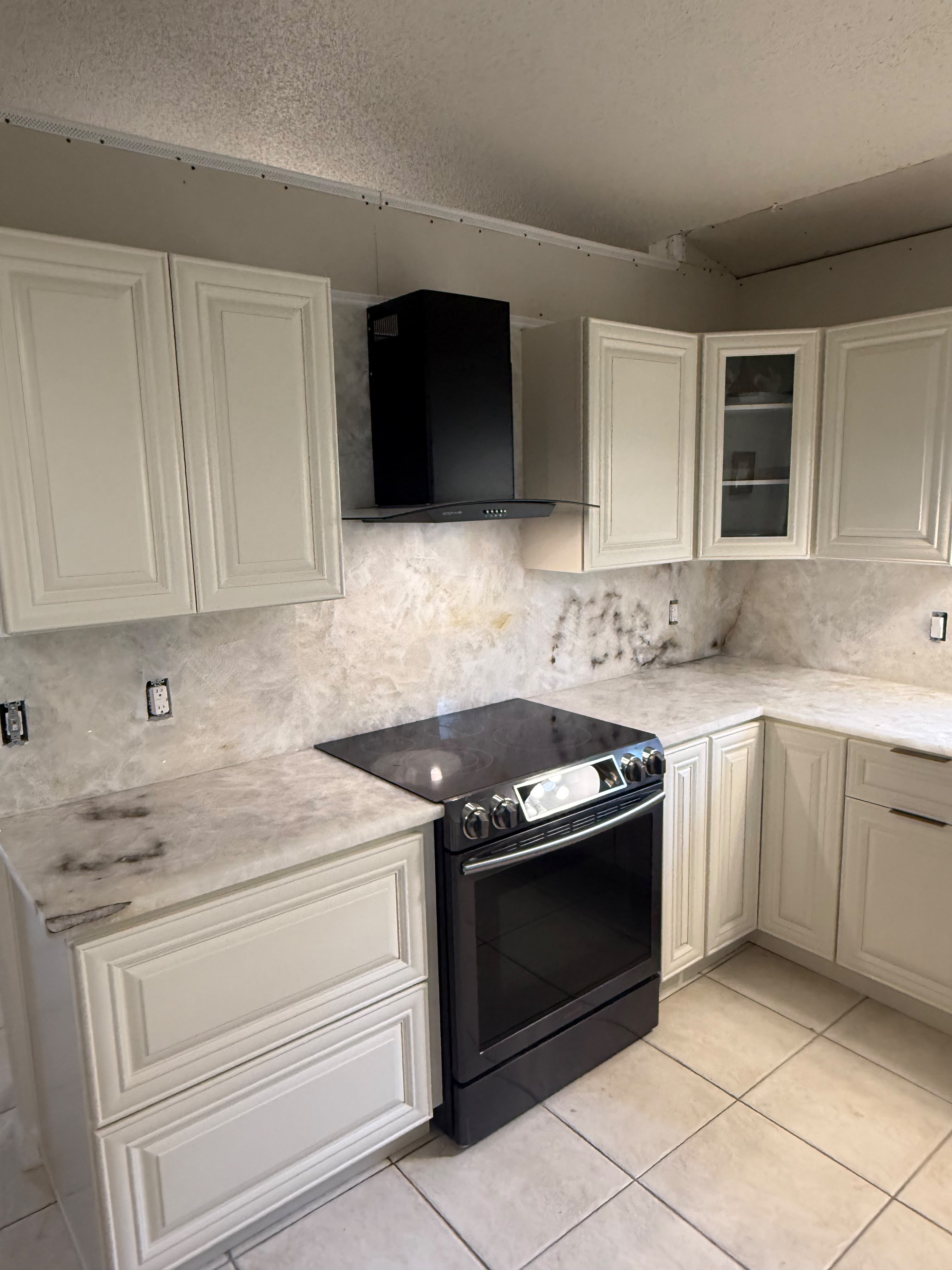
05 — Quartzite
How to Care for Quartzite Countertops
Quartzite is a natural metamorphic stone formed from quartz-rich sandstone that has undergone heat and pressure.
It is often selected for its natural movement and durability, but its maintenance requirements should still be evaluated as natural stone.
Quartzite care basics:
- Clean spills promptly
- Use products appropriate for natural stone
- Use soft or non-abrasive cleaning materials
- Use cutting boards
- Use heat protection as a practical precaution
- Evaluate whether the specific stone would benefit from sealing
Different stones marketed within the broad quartzite category can have different characteristics, which is another reason to obtain care guidance for the specific material selected.
06 — Marble
How to Care for Marble Countertops
Marble requires additional awareness because it is a calcium-based natural stone that can react with acidic substances.
Lemon juice, vinegar and other acids can chemically react with the stone and leave a dull area known as etching.
Etching is different from staining. A stain involves material being absorbed or deposited into the surface, while an etch is a physical change to the stone caused by a chemical reaction.
Marble care basics:
- Wipe spills promptly
- Be especially cautious with acidic foods and cleaners
- Use cleaners intended for appropriate natural stone surfaces
- Use cutting boards and trivets
- Evaluate sealing needs for the specific stone
- Understand that sealer does not make marble acid-proof
Sealing Does Not Prevent Marble Etching
A penetrating sealer can help reduce absorption when appropriate, but it does not stop acids from reacting with the stone itself.
07 — Spills & Stains
Why Prompt Spill Cleanup Matters
Cleaning a spill soon after it happens is one of the simplest countertop maintenance habits.
Natural stone varies in absorption, and some substances can become more difficult to remove when left on a surface for an extended period.
Engineered quartz is generally less absorbent, but pigments, chemicals or residues can still create cleaning challenges depending on the product and substance involved.
Rather than immediately reaching for a strong chemical, identify the countertop material and follow an appropriate cleaning method.
08 — Heat
Should You Put Hot Pans Directly on Countertops?
Using a trivet or other heat barrier is a simple way to reduce unnecessary risk regardless of countertop material.
Many natural stones tolerate heat well, but the entire countertop installation includes more than the stone itself. Sudden temperature changes and concentrated heat are still worth avoiding.
Engineered quartz deserves particular attention because its resin-based components can be affected by excessive heat.
The Easy Rule
If a pan, appliance or cookware item is hot enough that you are unsure whether it should sit directly on the countertop, use a trivet.
09 — Scratches & Cutting
Use a Cutting Board
Some countertop materials are highly scratch resistant, but scratch resistant does not mean scratch-proof.
Abrasive particles, certain tools, ceramics and other hard objects can potentially affect a countertop finish depending on the material.
A cutting board protects both the countertop and your knife edges, making it a practical choice even on durable stone surfaces.
10 — Natural Stone Sealing
What Does Countertop Sealer Actually Do?
A penetrating natural-stone sealer is generally intended to reduce the rate at which certain liquids can be absorbed into a porous stone.
It should not be confused with a coating that makes a countertop completely waterproof, stain-proof, scratch-proof or damage-proof.
Whether a natural stone needs sealing, and how often, depends on the actual material, finish, existing treatment, product used and conditions of use.
Engineered quartz generally does not require this type of routine penetrating sealer.
We will cover this topic more deeply in our dedicated Does Granite Need to Be Sealed? guide next.
11 — Avoiding Damage
Common Countertop Care Mistakes
Many countertop problems begin with assuming that a durable surface cannot be damaged.
Avoid habits such as:
- Leaving spills unattended unnecessarily
- Using unknown harsh chemicals without checking compatibility
- Using abrasive pads that can alter a finish
- Placing very hot cookware directly on engineered quartz
- Using acidic cleaners on acid-sensitive natural stone
- Cutting directly on the countertop as a routine practice
- Standing or climbing on countertops
- Assuming sealer makes natural stone immune to stains or etching
If you are uncertain about a cleaner or treatment, identify the countertop material and check the relevant manufacturer or stone care recommendations before using it.